
Pump Selection & Sizing
Choosing a Pump for a Low-Yield Borehole
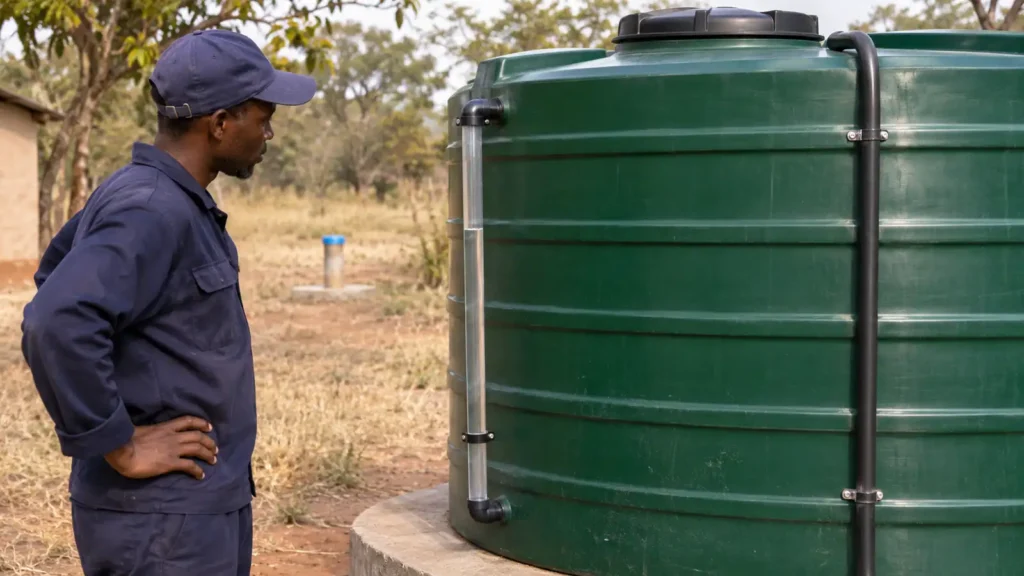
Size a low-yield borehole pump using the tested pumping rate and recovery schedule. Use a storage tank to cover the gap between slow tank refill and peak demand.
All pump guidesQDD PUMPS JOURNAL
Choose pumps around the water demand, source conditions and required duty point. These guides explain flow, head, pump curves, borehole fit and the information needed to compare suitable options.
Size a low-yield borehole pump using the tested pumping rate and recovery schedule. Use a storage tank to cover the gap between slow tank refill and peak demand.
Use the actual inside diameter and full pipe route to compare friction loss at the required flow. A worked example compares head loss through 25 mm and 32 mm bores, with pressure…
A deep well pump works inside a borehole. A surface pump transfers water or boosts pressure from above ground. Compare the water source, pump location and inlet conditions, and see where QDD's…
Choose a pressure tank by its drawdown at your operating pressures, not its total litres. A worked example connects usable water volume with pump run time.
Build irrigation zone demands from sprinkler and dripper data, then check head, borehole supply and the pump curve. A worked example shows why equal zone flows can require different head.
Select a booster around simultaneous demand, required outlet pressure and the minimum inlet supply. Follow an open-tank example to establish a flow/head duty point and check the pump curve.
Start with litres per day, then check seasonal solar delivery, pumping head and borehole limits. Storage must cover use outside pumping hours and recover after shortfalls.
Read flow and head as a pair, then check where the pump and system curves meet. Maximum figures alone do not tell you how much water your installation will deliver.
Borehole depth is not the lift you should use. Calculate head from pumping water level, delivery pressure and the full pipe route at your required flow.
Estimate pump electricity use from actual input power and running hours, or use a dedicated kWh meter. Motor size alone cannot tell you the monthly cost.
Use the details you have. We can help with the rest.