
From a storage tank
Describe the lowest water level relative to the pump and the inlet pipe route. Include the replenishment arrangement and low-water condition.
Pressure boosting
Describe where pressure is insufficient and which outlets operate together. The inlet conditions are just as important as the required delivery pressure.
Start a pressure brief
Understand the system
In a matched variable-speed system, pressure feedback helps the pump respond as outlets open and close.
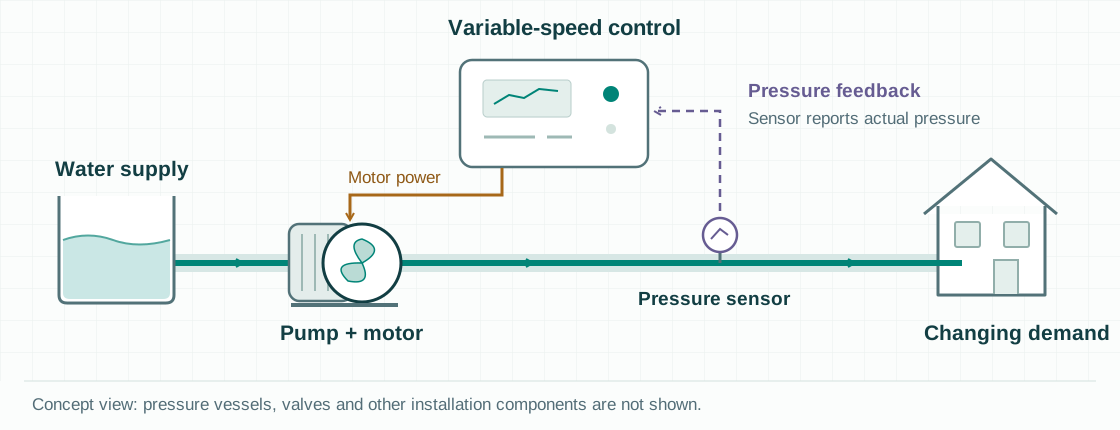
Opening an outlet changes the flow required from the water supply.
A compatible sensor reports the delivery pressure to the control system.
The matched drive adjusts motor speed to work towards the pressure setting, within the pump’s operating range.
A photo of the pump nameplate and a short description of the pressure problem are a useful starting point.
Define the task
Describe the lowest water level relative to the pump and the inlet pipe route. Include the replenishment arrangement and low-water condition.
Record the available pressure while water is flowing, where it was measured and how it varies. The installation arrangement must suit the local supply conditions.
For a useful recommendation
The pressure the pump needs to add depends on the available inlet pressure, the delivery elevation and system losses. An outlet pressure target on its own is not a complete pump duty.
Build a selection briefRelevant products
Before you choose
Include readings under operating demand and identify the measurement location. A static pressure reading does not describe pressure during simultaneous use.
First describe the source, inlet restrictions, pipework and required duty. A different pump alone may not resolve limitations elsewhere in the installation.
From application to product
Browse the relevant families, or ask us to help narrow them down.
Start with the incoming supply and the pressure needed where the water is used.
These are product directions, not an automatic pump selection. We’ll confirm the duty, installation and electrical fit for the proposed model.
Your next step
Unknown measurements can stay unknown. Start with the water task and the information available.