
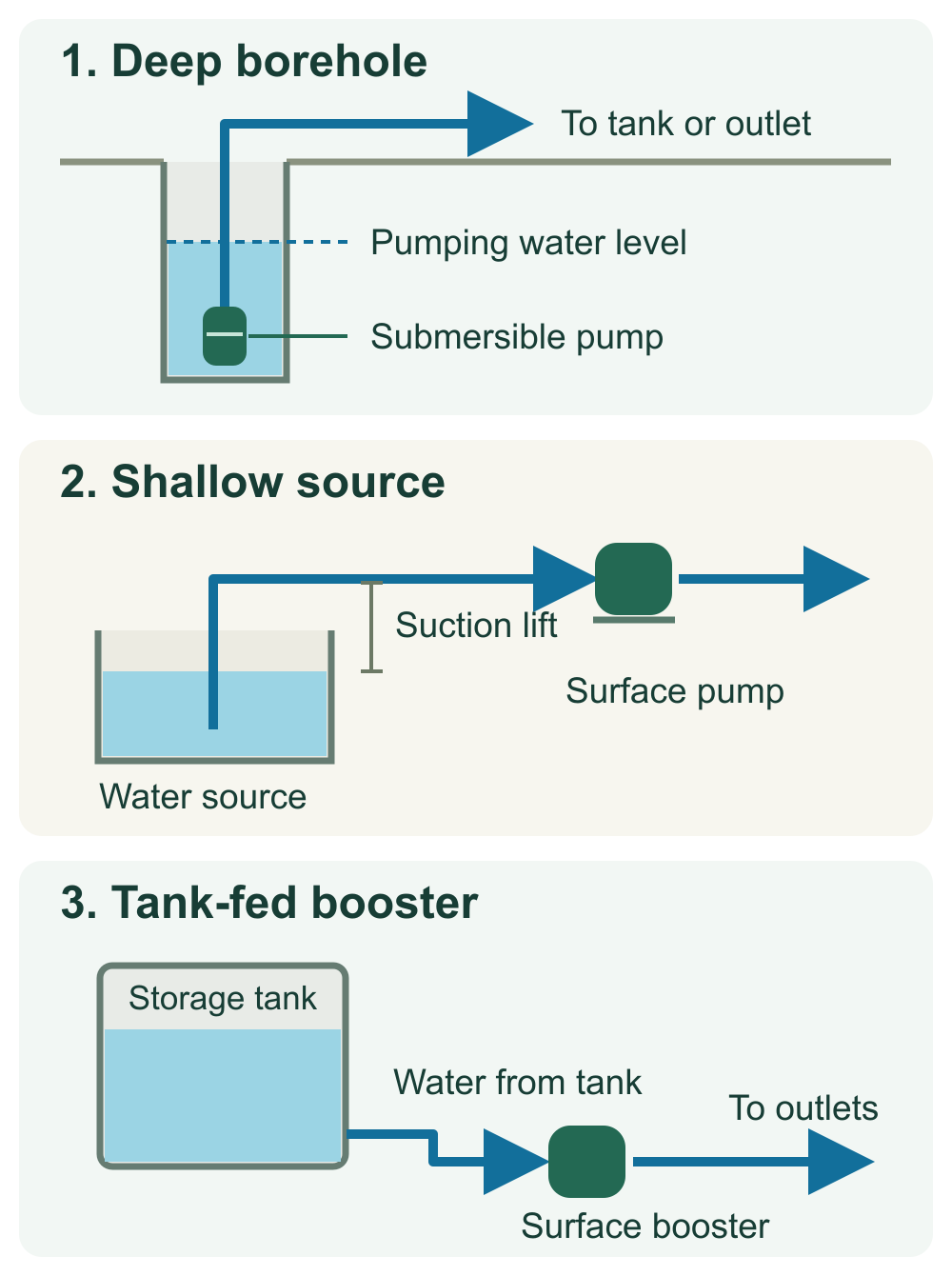
A deep well submersible pump sits below the water level inside a borehole and pushes water up a delivery pipe. A surface pump sits outside the water source. It draws from a suitable nearby source or takes water already available at its inlet, then transfers it or raises its pressure. Here, “regular water pump” means the common surface pumps used for those jobs.
Which type does QDD list?
QDD’s 100QJ, GSR, 100GSP and 150GSP are borehole pump series. The 100QJ uses a conventional AC configuration. GSR, 100GSP and 150GSP use permanent magnet motors and require a matched drive configuration. “Conventional AC” describes the electrical configuration of the 100QJ, which is still a deep well submersible pump. QDD borehole pump range.
QDD also has a section for surface transfer and booster requirements. If you are moving water from a storage tank or improving pressure at the outlets, start with that section and describe the inlet conditions and demand. QDD surface and booster pump requirements.
Start with the water source and the pump position
For a borehole, check the water level during a pumping test at a known flow. This is the pumping water level, sometimes called the dynamic water level. The pump needs enough water over its intake at the lowest expected pumping level, with the clearance and cooling required for the selected unit. The pumping level helps determine the lift to the destination, and the well’s tested yield helps limit how much you can withdraw. Xylem’s borehole pump selection guide and QDD’s guide to flow, head and well yield.
For a surface pump above a shallow source, suction lift is the vertical rise from the water surface to the pump. The usable lift depends on the pump and installation, including inlet pipe losses, water temperature and site elevation. A tank with its water level above the pump inlet can feed a surface pump by gravity. That arrangement is common when the job is to boost pressure downstream of storage. KSB’s guide to suction lift.
| Your supply task | Where to start |
|---|---|
| Lift groundwater from a deep borehole | Check a submersible borehole pump and the well’s pumping level, yield and diameter. |
| Transfer water from a shallow source | Check a surface transfer pump and the actual inlet conditions. |
| Raise pressure downstream of a storage tank | Check a surface booster and the pressure and flow needed at the outlets. |
Why high head and deep suction are different
Head describes how much energy the pump adds per unit weight of water. A multistage surface pump can develop substantial head for transfer or pressure boosting. Check its suction limit separately. When the water is below the pump, use the actual inlet lift and losses to check whether that installation can feed the pump. Pedrollo, for example, lists head and suction head as separate specifications for its PLURIJET surface pumps. Pedrollo multistage surface pump specifications.
You may also see a deep well jet pump with its motor above ground. This is a specific system that sends drive water to an ejector below the water level in the well. The ejector and pipe arrangement let the system work with deeper water levels than a simple shallow well suction line. If your existing system has a downhole ejector, identify it before choosing a replacement. Pentair deep well jet pump installation manual.
One property can use both types
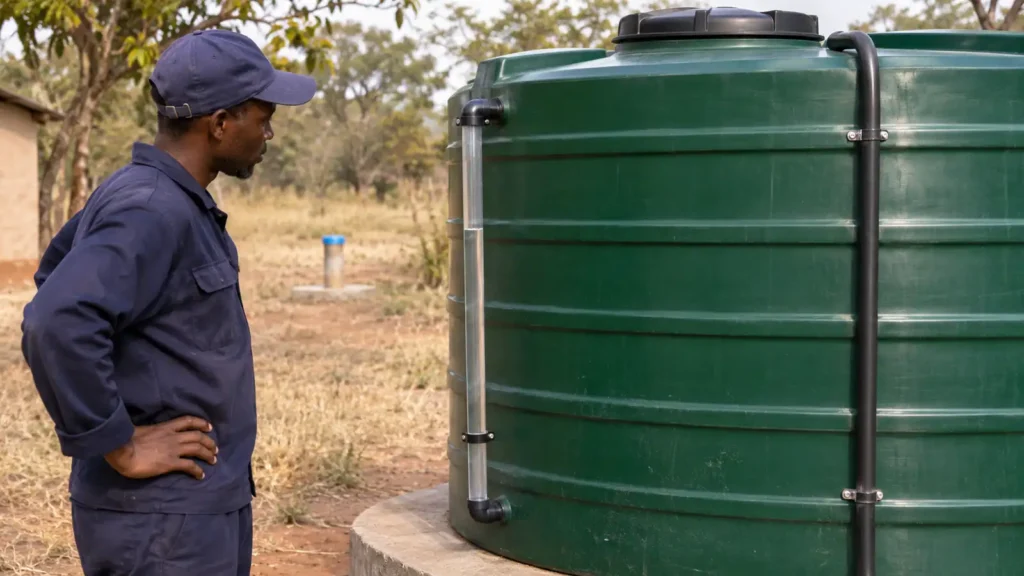
Suppose the water in a borehole settles 18 m below ground during pumping. The delivery pipe will discharge into the top of a vented storage tank. The house needs more pressure than the tank can supply by gravity. A borehole pump can lift water into the tank, and a separate surface booster can draw from the tank to serve the house.
These pumps have different duties. For the borehole pump, calculate the required flow and total head from the pumping water level to the tank inlet, including pipe losses. For the booster, use the inlet conditions supplied by the tank, the outlets that run together, and the pressure needed while water is flowing. Where a well pump feeds the outlets directly, select the pump and controls for that delivery arrangement. QDD’s booster pump sizing guide.
If you are replacing equipment, begin with the water source, a photo of the accessible pump label and where the water goes. For a borehole selection, add the well diameter, pumping water level and yield if you have a well test. For a tank or other surface source, note the lowest water level relative to the pump and describe the inlet pipe. Those details help a supplier identify the pump type before comparing models on the same duty point.