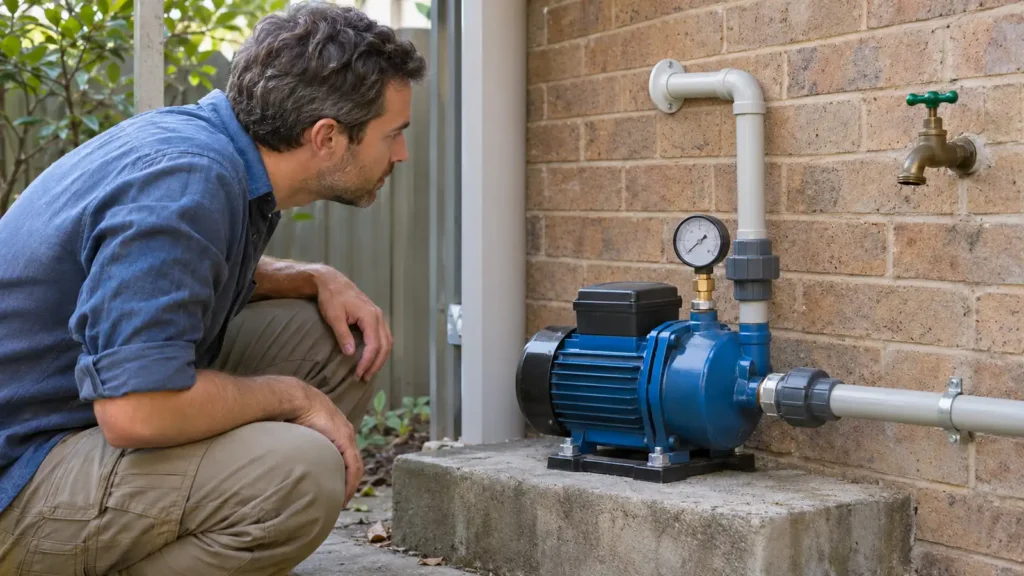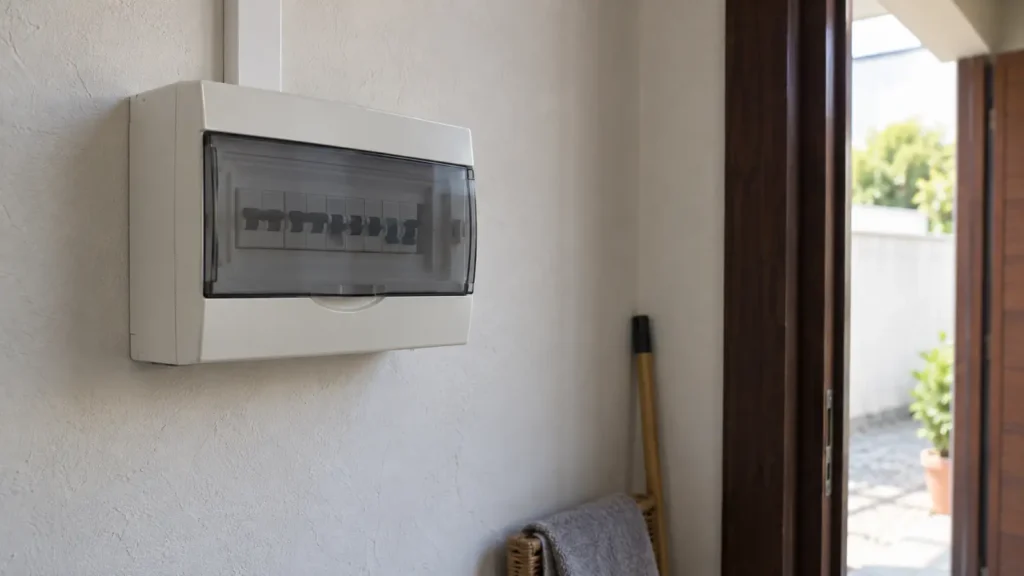

Low water pressure from a borehole system does not automatically mean the downhole pump needs replacing. First identify whether the borehole supplies the taps directly or fills a vented storage tank. Then establish whether the problem affects one outlet, the whole property or only periods of heavier use. Those answers determine where pressure and flow should be checked.
A weak stream shows reduced delivery at that outlet; it does not, by itself, measure pressure or locate the fault. This guide covers systems that still deliver some water. If delivery has stopped completely, use the separate borehole pump running but no water guide.
1. Identify what supplies pressure to the taps
In a direct-supply system, the borehole pump delivers into the pressurised distribution pipework. Its available head must cover the lift from the pumping water level, the required outlet pressure and losses through the delivery route. Filters, valves, leaks and simultaneous demand can all affect what reaches the user.
In a storage-and-booster system, the borehole pump fills a vented tank with a free water surface. The tank separates the borehole filling stage from the downstream pressure stage. The borehole pump’s discharge pressure is not carried through that tank to the taps; downstream supply depends on the available water level, gravity and any booster pump. Grundfos describes a break tank as a pressureless tank.

A sealed pressure vessel is different from this storage tank. It stores a limited volume of water under pressure and may form part of the pump’s control arrangement. Identify which type you actually have before following tank-related advice.
If a borehole-fed storage tank contains usable water but every tap is weak, start with the tank outlet and downstream system. If the tank level falls during use and does not recover adequately, investigate the filling stage as well. A full tank alone does not prove that water can reach the booster inlet through a restricted outlet or pipe.
2. Use the symptom to choose your first check
Compare the affected outlet with others supplied by the same system. Note whether hot and cold water behave differently, when the problem began and what changed immediately before it.
| Symptom | First area to investigate |
|---|---|
| One tap or shower is weak; comparable outlets work normally | That fixture, its aerator or shower head, local valve and branch pipe. |
| Cold water is satisfactory but hot water is weak | The hot-water route, heater and mixing controls with a suitable plumber. |
| All outlets are weak while the storage tank has usable water | Tank outlet, booster inlet and operation, shared filters and distribution pipework. |
| One outlet works well; delivery deteriorates when another opens | Available flow and pressure under simultaneous demand, including shared restrictions. |
| Delivery deteriorates as the tank level falls | Borehole refill rate, tank controls and the booster inlet conditions. |
| Pressure repeatedly rises and falls with rapid pump starts | Leakage, control operation and the pressure vessel where fitted; record the cycle separately. |
These are starting points, not diagnoses. A new filter installation, partly closed valve, changed controller setting or additional irrigation zone can be more useful evidence than the pump’s age alone.
3. Compare pressure with and without water use
An existing gauge may show a satisfactory reading while all outlets are closed, then fall substantially when water is being used. The first reading shows pressure under the recorded no-use condition. It does not establish the system’s ability to sustain the required flow. Flow-related pipe losses arise as water moves; Grundfos explains this distinction in its water boosting pressure-loss lesson.
At a suitable existing measurement point, record:
- Pressure with outlets closed, plus whether the pump is stopped, running or cycling.
- Pressure while a specified outlet or group of outlets is drawing water, plus the pump state at that time.
- The outlet locations, approximate combined flow, tank level and time of the observation.

Keep the measurement location and test arrangement consistent. On a pressure-switch system, note where the reading sits in the start/stop cycle. On a variable-speed system, distinguish the requested pressure setting from the measured pressure. Compare actual readings with the applicable equipment requirements, rather than treating a single “normal household pressure” as universal.
Measure flow separately
For an accessible outlet that can discharge safely, collect a known volume and time it. Flow in litres per minute = collected litres × 60 ÷ elapsed seconds. For example, 5 litres collected in 40 seconds is 7.5 L/min. This is an arithmetic example, not a recommended flow rate or a measurement of pressure in bar.
Record the fixture setting and other water use during the collection. A shower head or flow-limiting aerator can determine the result even when upstream pressure is adequate. A container test at a tap measures that tap’s delivered flow, not the borehole’s sustainable yield.
Use visible gauges and approved test points. Have a competent service person install or connect any additional measuring equipment. Do not loosen a running pipe joint to obtain a reading. Isolate equipment, prevent automatic restart and release pressure as required before servicing a filter or fitting.
4. Follow the water through the system
If the storage tank is running low, investigate refill first
Record the tank level before and during the affected period, the borehole pump’s operating indication and whether water actually enters the tank. The level can fall because demand exceeds the refill rate, the filling pump is stopped by a control condition, or delivery has deteriorated. Check for visible tank or supply-line leaks too. Tank capacity provides a buffer; it does not create extra borehole yield.
For reduced borehole delivery, a technician should compare the current flow, pumping water level and delivery pressure with the original operating record and the actual pump curve. Franklin Electric’s turbine pump troubleshooting guidance recommends recording those conditions together and examining changes to the installation before assuming the pump must be retrieved.
The pumping water level matters because a greater lift can leave less head available for the rest of the route. Total drilled depth is not a substitute for that reading. Do not lower the pump or increase abstraction without checking the borehole report, sustainable supply and equipment installation limits. Keep low-water and tank-level protection active.
If the tank has water, check the booster inlet and operation
Check accessible valve positions, visible leaks, damaged or kinked pipework and any inlet strainer according to its maintenance instructions. The booster needs water at its inlet under the actual operating conditions; a tank above ground does not automatically guarantee a satisfactory inlet if the connecting route is restrictive.
Record controller messages without opening electrical equipment. A powered display does not establish that the pump is running normally. Air entering an unsuitable or leaking suction arrangement, restricted inlet supply, a control fault or reduced pump performance can require different corrective work. Leave electrical measurements and drive changes to qualified personnel.
Grundfos’s storage-tank boosting lesson treats tank level, inlet conditions and dry-run protection as part of the application. If the pump loses its water supply, stop and investigate under the equipment instructions; do not bypass protection to keep it running.
Compare the shared filter and delivery route under flow
If pressure is available before a filter or pipe section but delivery is poor after it, check that section. A filter can restrict flow while the no-use pressure on both sides appears similar. Its condition is better assessed using its specified pressure-loss or service criteria under a recorded flow condition.
Where suitable gauges exist on both sides, compare readings during the same steady test, at comparable elevations, with no unaccounted branch flow between them. Otherwise a pressure difference can include elevation, another restriction or a different operating condition. Amiad’s AGF filter troubleshooting manual lists excessive flow and measurement faults alongside contamination as possible reasons for a high differential pressure. Compare with the clean-system baseline and your filter’s instructions; the AGF service thresholds are not universal limits for household cartridges.
Have the relevant equipment serviced when the evidence supports it. Do not remove treatment, bypass it for household use or raise pump pressure to conceal a restriction. After service, repeat the same pressure-and-flow observation to check whether delivery improved.
If only one fixture is weak, check locally
A scaled aerator, blocked shower head, partly closed local valve or restricted flexible connector can limit one outlet. Compare another outlet on the same supply before investigating the downhole pump. Use the fixture manufacturer’s cleaning or replacement procedure; do not force an unfamiliar fitting apart.
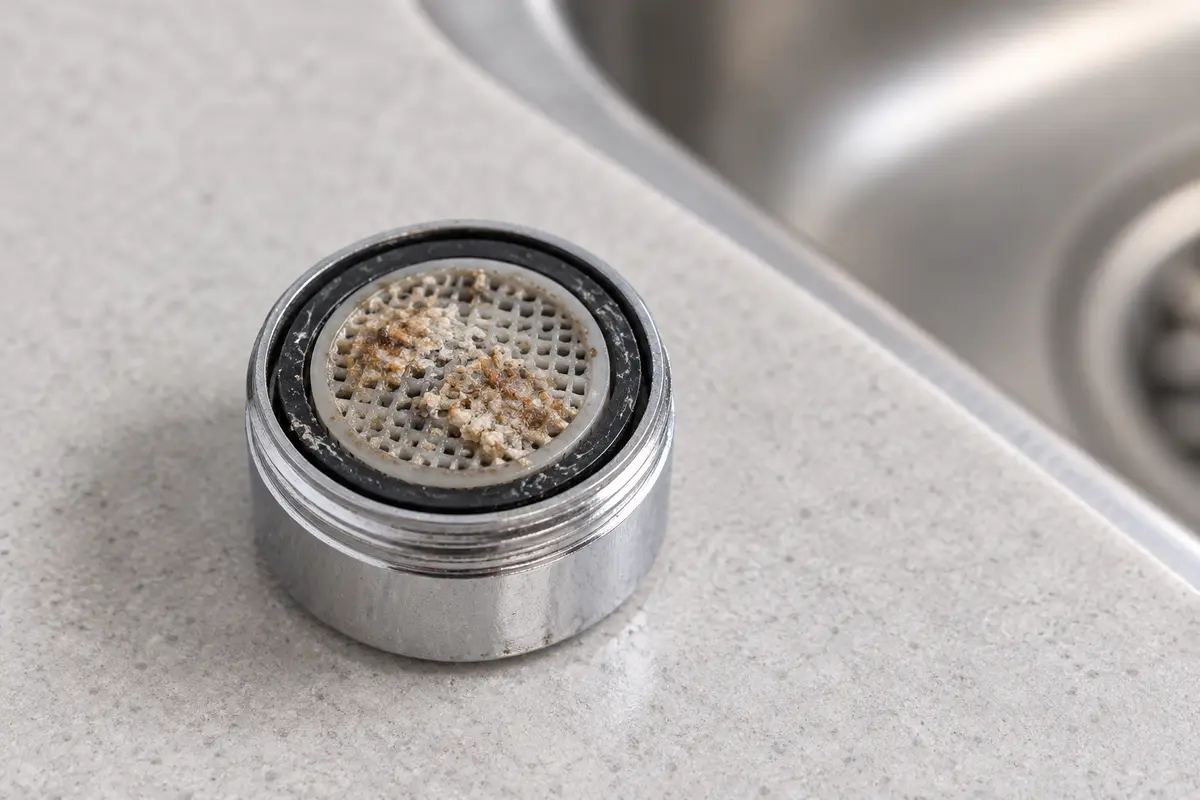
The appearance of deposits does not establish their composition or the water’s suitability for drinking. If hot water alone is affected, keep the investigation on that route rather than increasing the pressure of the entire supply system.
5. Check what changes when demand increases
If one outlet performs adequately but several together do not, distinguish a shared restriction from a pump or source that cannot meet the combined requirement. Compare pressure and delivered flow for one defined demand, then a second defined demand. Record whether the storage level or borehole pumping level changes during those observations.
An installer can assess the duty point: the required flow at the head needed to overcome elevation, outlet pressure and route losses. A higher outlet requires more head; a long or small pipe can consume more head at a greater flow. Maximum head and motor kW alone do not establish what the installed pump can deliver at the required flow. For the borehole stage, use the borehole pump sizing guide alongside the actual source and installation data.
For a solar borehole pump filling storage, note whether refill is inadequate only at certain times or throughout suitable sunlight conditions. Record shade, controller state, water level and daily replenishment separately from pressure at the house. If a separate booster supplies the house, a change in solar refill first affects stored-water availability; it does not transmit the borehole pump’s pressure through the vented tank. A direct solar supply needs its own flow-and-head assessment at the actual operating conditions.
6. Record the evidence before changing equipment
Copy this record for the installer or service technician. Keep unknown values marked as unknown.
| Record | Details to provide |
|---|---|
| System route | Direct borehole supply, or borehole → vented tank → booster → outlets; mark filters and gauge locations. |
| Symptom | Affected outlets; hot/cold difference; one or several outlets in use; sudden or gradual change. |
| Equipment | Pump, motor and controller models; nameplate photos; supply type and current indications. |
| Measurements | No-use and flowing pressure, gauge locations, pump state, collected volume/time and other water use. |
| Source and storage | Tank-level trend, observed refill, available pumping-water-level record and its measurement reference. |
| Recent changes | Filters, valves, leaks, repairs, settings, new outlets or irrigation schedules. |
Ask for the identified problem, the evidence supporting it and the proposed work. After correction, repeat the observations at the affected outlet under the same demand conditions. An improved gauge reading beside the pump is not sufficient if the user’s outlet still performs poorly.
Send equipment identification and the record through QDD support. If the assessment calls for a different downstream supply arrangement, the pressure boosting application page explains the information needed to discuss the requirement.
Two common follow-up questions
Will a bigger pressure tank fix persistent low pressure?
A correctly matched pressure tank can provide water between pump cycles and reduce frequent starts. Amtrol describes these functions in its pressure tank support guidance. It cannot continuously make up a flow or head deficit once its stored drawdown is used. Check vessel condition and control matching when the symptom is cycling, and assess sustained delivery separately. Precharge procedures and values must follow the actual tank and control instructions.
Should I increase the pressure setting?
Only after identifying the cause and verifying the system’s capability and component limits. Raising a setting does not unblock a filter, repair a leak or restore inlet water. A qualified installer should check the available pump performance, control arrangement and pressure ratings before making the change.