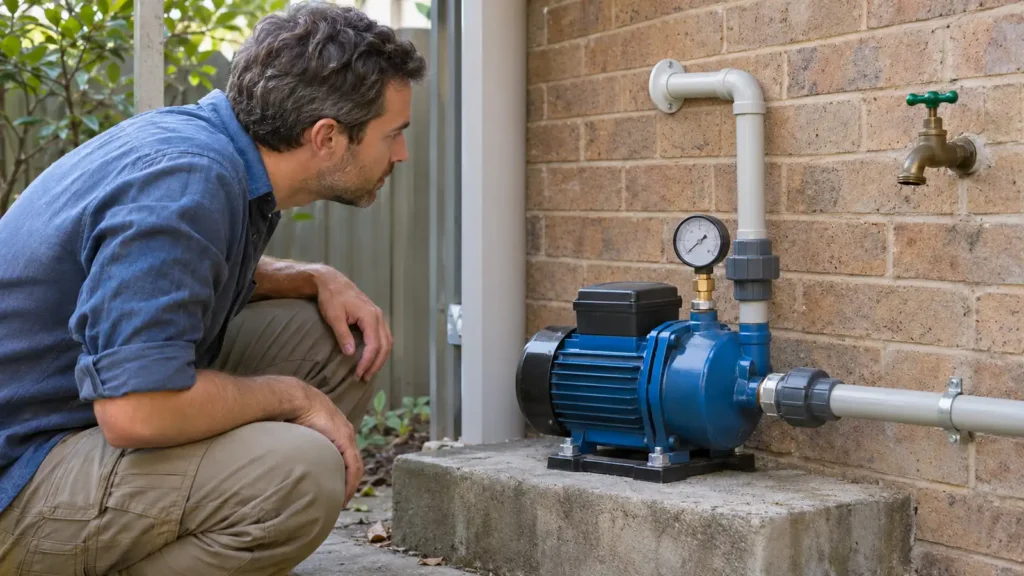
A borehole pump that keeps tripping does not automatically need replacing. The problem may involve the electrical supply, controls, cable, a connection or the motor. Start by identifying what actually tripped, then describe when it happened. Those two details help a technician choose the right checks before recommending parts or lifting the pump.
If the protection keeps operating, do not keep resetting it to maintain the water supply. Do not fit a larger breaker or bypass protection as a workaround. Where electrical equipment is wet, scorched or visibly damaged, keep clear and arrange qualified electrical service; getting a photograph is secondary.
You can start the enquiry without an ammeter, a wiring diagram or even the correct name for the switch.
Identify the device that changed state
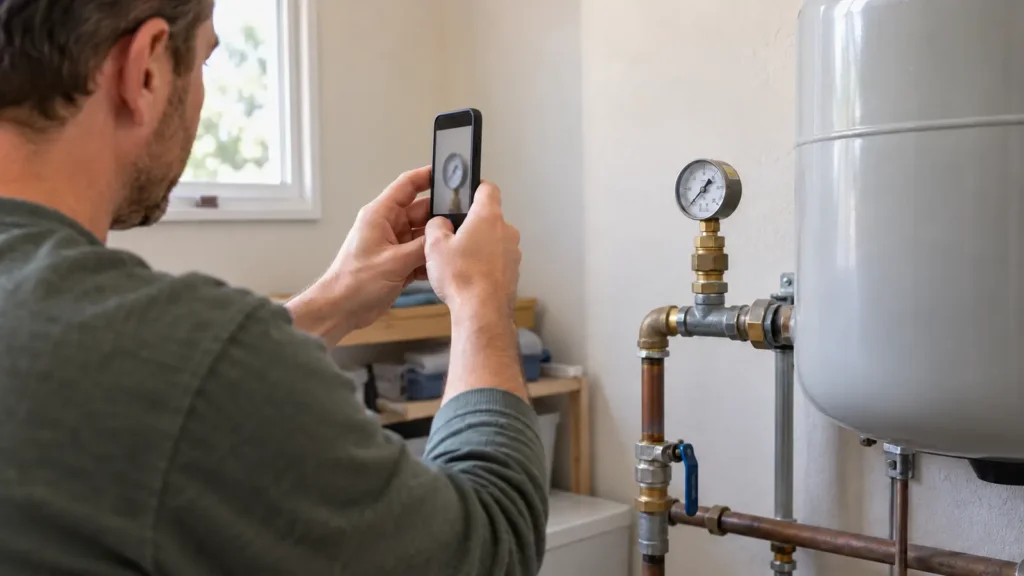
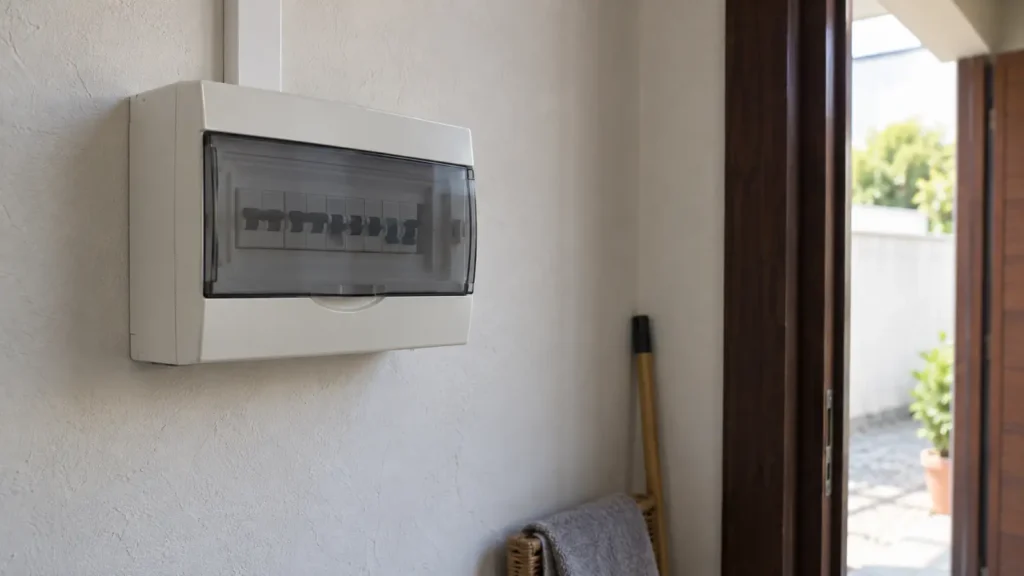
From a safe, accessible position, look at the existing external labels and display. Keep protective covers in place. A photo may be more useful than guessing what the device is called, and you do not need to press TEST or RESET to collect this information.
A switch in the distribution board has tripped
There are several different protective functions, even when the devices look similar:
- MCB — miniature circuit breaker: protects against circuit overcurrent, including overloads and short circuits.
- RCCB — a residual-current device without built-in overcurrent protection: responds to a current imbalance, commonly described as earth leakage. Separate overcurrent protection is needed.
- RCBO: combines residual-current and overcurrent protection in one device.
RCD is the broader term for residual-current devices. A TEST button alone does not tell you whether you have an RCCB or an RCBO. Check the model and markings, or let the electrician identify it. Schneider Electric explains the RCCB/RCBO distinction and the separate roles of an RCCB and MCB.
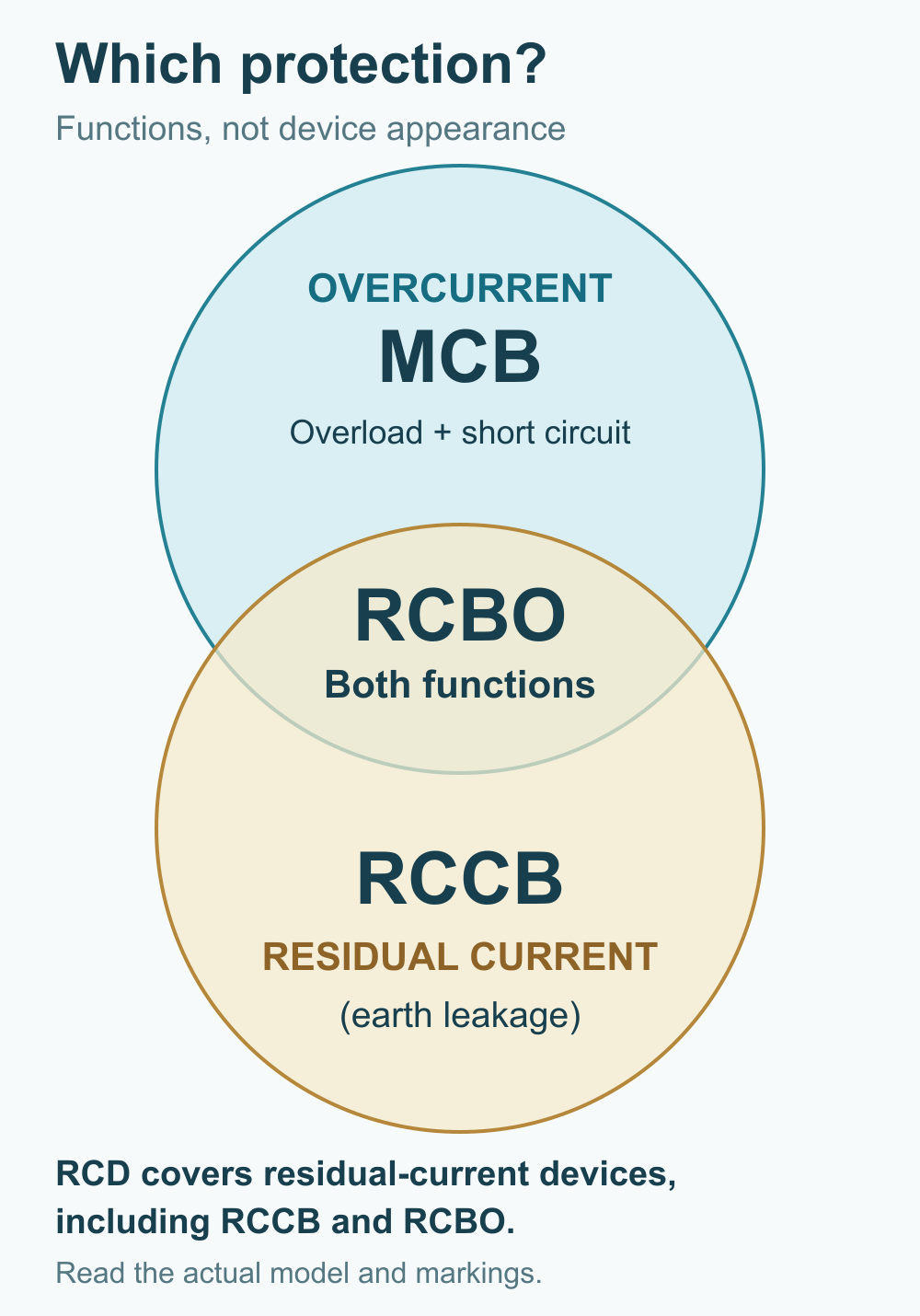
An RCBO trip, for example, does not by itself tell you which of its functions operated. Likewise, earth-leakage protection operating does not prove the motor below ground has filled with water. The affected wiring, connections and equipment need checking.
Note whether only the pump lost power or other circuits went off too. If an upstream device serves several circuits, the electrician needs to identify its coverage and the source of the event rather than assume every outage came from the pump.
The starter or control box shows an overload
The household distribution-board switches may remain on while motor protection stops the pump. Record the overload indication and the starter or controller model.
Motor overload protection and circuit-breaker protection are not interchangeable descriptions. A thermal overload relay responds to current and its thermal effect; it is not necessarily a direct measurement of the submerged motor’s temperature. Schneider’s overload-relay technical guide explains this operating principle.
The controller displays a fault but no breaker has moved
Write down the complete message or code and the controller model. A drive can stop the motor because of a condition it detects while its own display remains powered. That needs the correct model’s fault guidance, not another brand’s code list.
For example, Franklin’s SubDrive/MonoDrive FAQs give several possible causes for underload. The indication alone does not establish that the borehole is dry. A blank screen also needs a supply check; it is not evidence that the motor has failed.
If nothing has tripped and the pump is simply starting and stopping repeatedly, see the water-pump cycling guide. If it stays running without delivering water, use the running-but-no-water guide. These are different observations to give the service provider.
Use the timing you have already observed
Describe the last event. There is no need to restart a faulting pump to obtain a more exact time. Also distinguish “the system was available all day” from “the motor ran continuously all day”.
It trips as the pump tries to start
Tell the technician whether the motor appeared to start or whether protection operated immediately. Depending on the device that acted, the investigation may include starting current and supply voltage, insulation or wiring faults, starting components where fitted, or mechanical resistance.
That timing does not select a replacement capacitor or condemn the motor. Grundfos’ tripping FAQ lists multiple electrical, protection-setting and mechanical causes. The correct checks depend on the installed motor and starting method.
It runs for a while before stopping
Give the approximate running time, what water was being supplied and any change in flow or sound before it stopped. A technician may need operating voltage and current, protection settings, the motor’s load and cooling conditions, and any recorded controller event.
Grundfos’ motor-overheating guidance covers several possible causes, including electrical supply problems and insufficient cooling flow around a submersible motor. A delay before stopping is a clue, not a temperature measurement. Restarting after a rest does not demonstrate that the cause has been repaired.
It happens after rain or in damp conditions
Mention the weather and any visible damage or moisture around accessible equipment. This helps direct inspection toward exposed boxes, cable entries, joints and cable condition, particularly when residual-current protection has operated.
It does not locate the fault below ground. Do not open a wet box, handle damaged cables or assume drying the outside has restored the installation. The service visit needs to establish where moisture or insulation damage is involved and how recurrence will be prevented.
It began after installation work or a supply change
Say what changed: pump, cable, controller, settings, generator, inverter or supply arrangement. Keep any old and new model details you already have.
The electrician and pump technician can then check the installed combination against its requirements. A new pump tripping an existing breaker is not, on its own, evidence that the breaker should be larger. Protection must remain appropriate for the circuit and equipment; its rating should not be increased just to stop the symptom.
Before approving a pump lift or another replacement
Ask the service provider to explain what was tested and which part the result applies to. This is more useful than receiving only “bad insulation” or “overload”.
The investigation should distinguish the supply and surface controls from the cable, joints and motor. A test that includes a long cable and the submerged motor can reveal a problem in that combined circuit, but it cannot always identify which component caused the result. Some faults still require lifting the pump to separate, inspect or repair those parts.
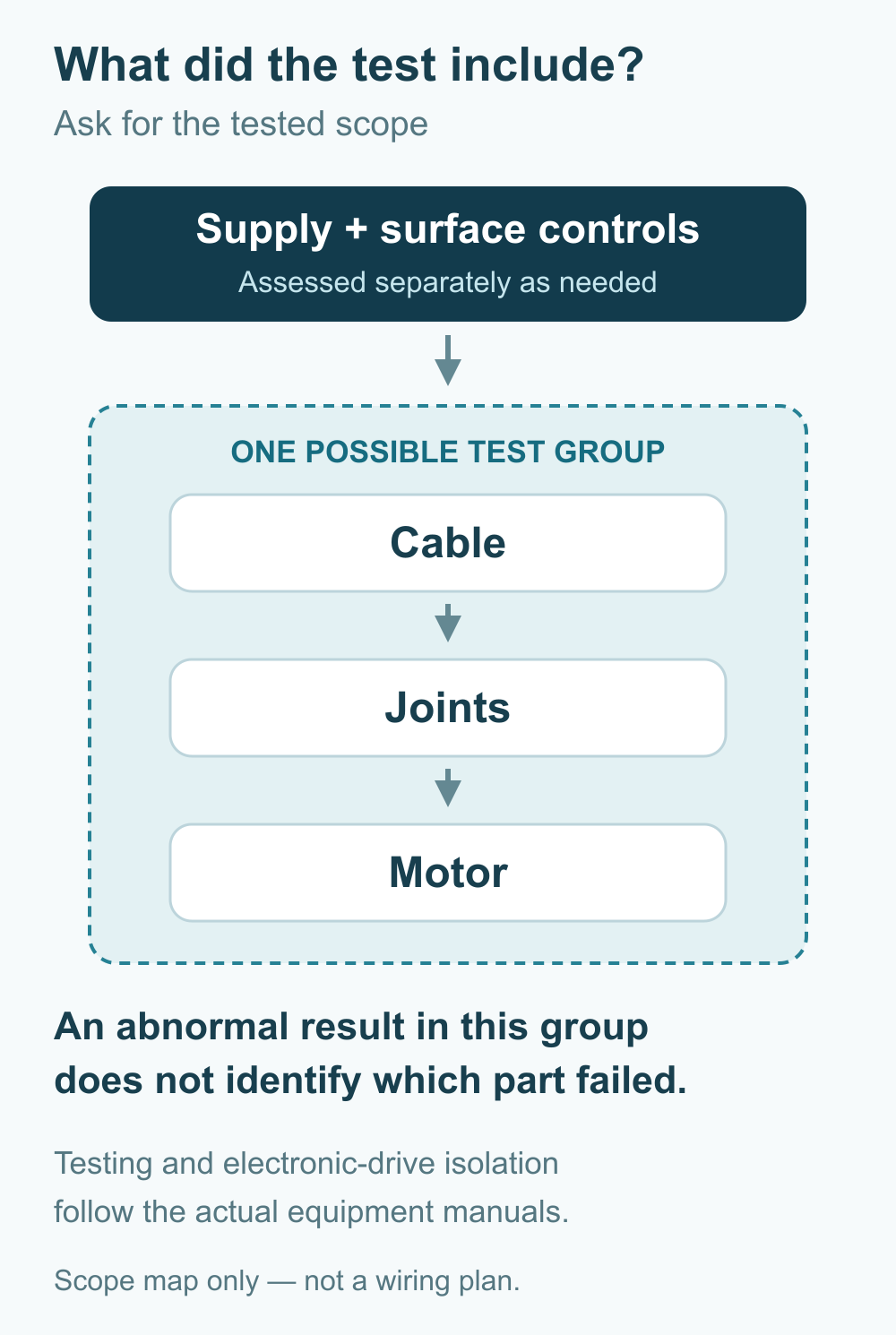
Three useful questions to ask are:
- What happened to the supply and current under operating conditions? A voltage reading taken while the pump is stopped may miss a problem during starting or running. Three-phase installations may also need checks for missing or unbalanced phases.
- Which parts were included in the electrical tests? Ask whether the result covers the surface cable, downhole cable, joints, motor or a combination, and what evidence supports the proposed repair.
- Do the controls and protection match the actual equipment? The relevant motor, controller and cable information should support the settings or replacement recommendation.
These are requests for a qualified person’s findings, not tests to carry out yourself. Insulation testing also requires the correct treatment of connected electronics. Beckhoff’s drive instructions explicitly warn against insulation testing the drive and require disconnection for the specified motor/cable test. The technician must follow the instructions for your equipment; there is no single test voltage or pass value suitable for every assembled system.
Send a short, useful service request
You do not need to fill in every electrical parameter before asking for help. Start with these three lines:
- What changed state: the accessible device label or photo, or the exact controller message. “Unknown device” is fine.
- When it happened: at the start, after roughly how long running, after rain, or after recent work. Use what you already observed.
- What stopped: pump only or other circuits too; whether water stopped completely or changed before the trip.
Add the pump and controller model if available. A previous invoice, nameplate photograph or installation record may supply it without opening anything. For an equipment-identification or matching enquiry, send the existing information through QDD support; on-site electrical diagnosis belongs with a qualified local electrician and, where needed, a borehole-pump technician.
After repair, ask for the fault found, the part repaired or changed and the relevant retest results. The service provider should confirm that the protection remains effective and the system delivers water normally under the conditions that caused the complaint. A successful reset alone is not that confirmation.